

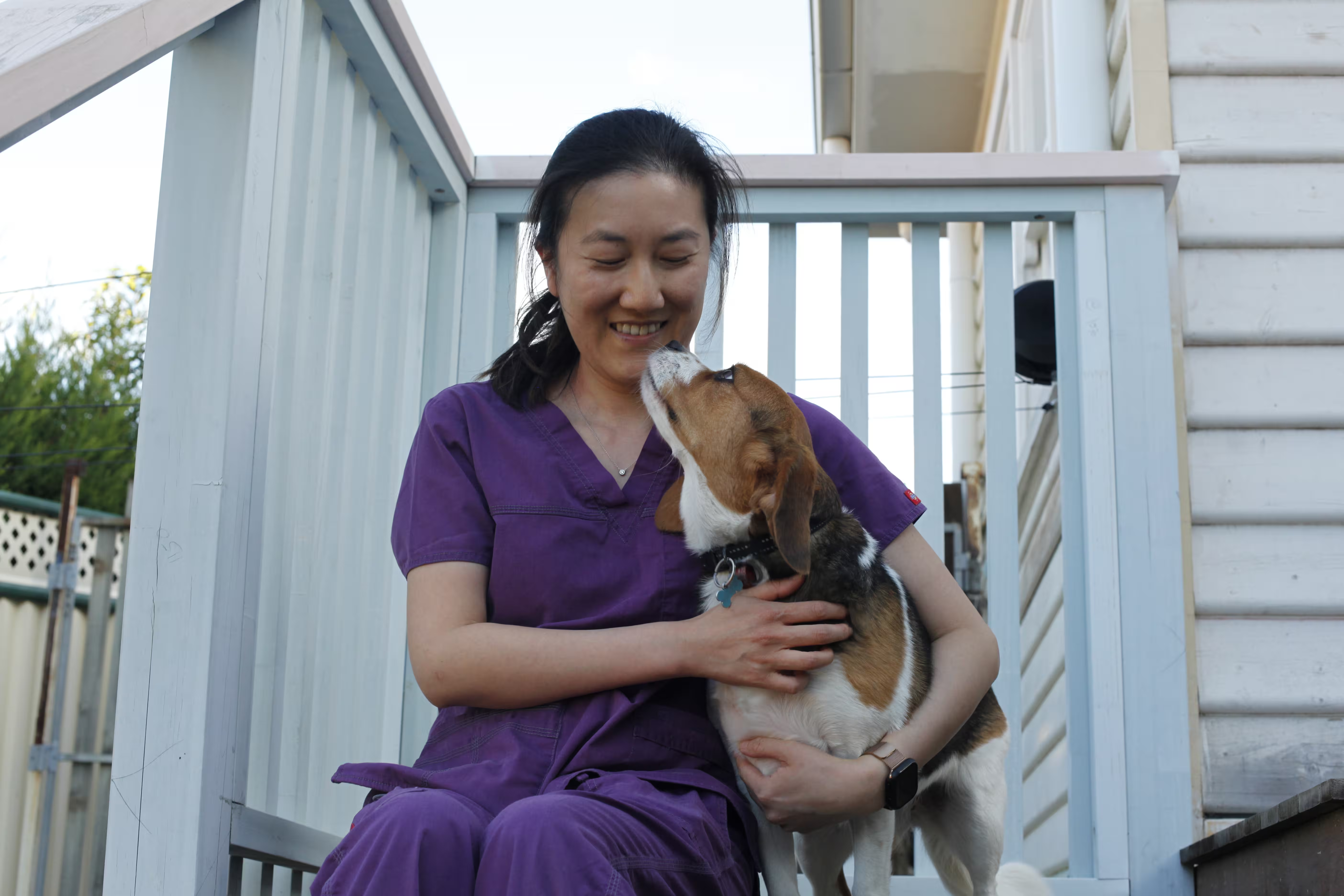
I graduated from the University of Queensland in 2007. My first decade was spent across three very different settings: an emergency department, the surgical unit of a university teaching hospital, and a suburban general practice.
Each one taught me something different. Emergency taught me to read animals who couldn't tell me what was wrong, and surgery taught me how broken things actually get fixed. General practice taught me what most pets need most of the time, which turns out to be steady preventative care from someone who knows them.
Around 2016, I moved my focus fully to general practice. I wanted to work alongside families looking after their pets, doing vaccinations, wellness checks, and the everyday work of keeping animals healthy.
In 2017, I took a short course in feline behaviour, and it changed how I thought about every exam.
I started watching for the small signals, like a flicked tail, pinned ears, or the moment a cat decides to shut down. I learned to slow down and let the patient set the pace. The result was calmer animals and better medicine, and dogs benefited from the same principles.
The change was gradual, and I spent years building the approach into my clinical work. Two years ago, I moved fully to Fear Free handling. Last year, I sat the certification and passed. This year, I moved the whole practice to home visits.
Here's what I'd been noticing the whole time. The carrier, the car ride, and the waiting room were responsible for most of the stress my patients arrived with, and by the time I said hello, the exam was already uphill. I wanted to take all three off the table.
So Gentle Vet Care is what grew out of all of it. I drive to your house across Wyndham Vale, Werribee, Tarneit, Hoppers Crossing, Point Cook, Manor Lakes, and the surrounding western suburbs. The exam happens on the living-room rug, or the couch your cat already claims, or wherever your pet is most comfortable.
I believe your pet is most comfortable at home. After nearly 20 years in practice, that's where I think the best medicine usually happens.